

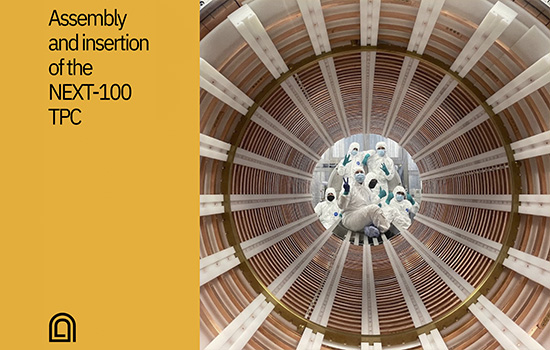
Assembly and insertion of NeXT-100 TPC
Over this summer, members of the staff of the NEXT experiment from England, Spain and the United States completed the assembly and insertion of the NEXT-100 TPC.
Over this summer, members of the staff of the NEXT experiment from England, Spain and the United States completed the assembly and insertion of the NEXT-100 TPC.
Ana Aricha Yanguas, Vice Deputy Director-General for the Internationalisation [...]
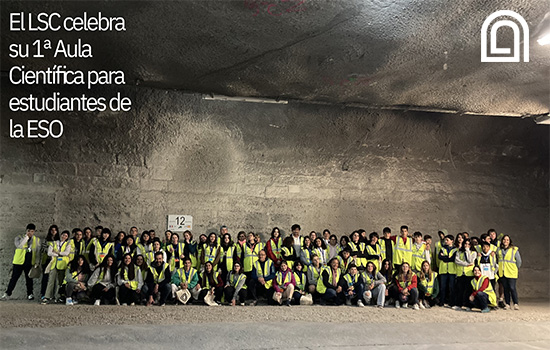
El LSC ha celebrado la primera Aula Científica para estudiantes de 2º de la ESO, en el marco del Foro de Comunicación y Escuela, organizado por el Principado de Asturias en la cual, 46 alumnos de 5 institutos de Asturias han convivido con 15 alumnos de Jaca con un programa científico diseñado a su medida.
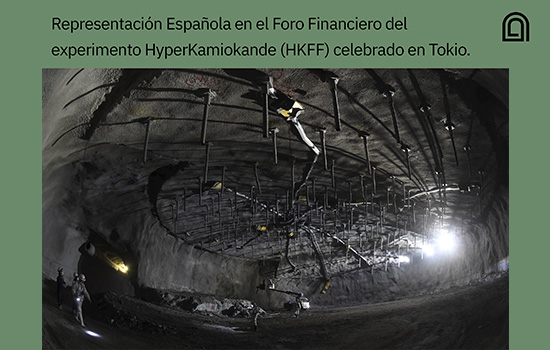
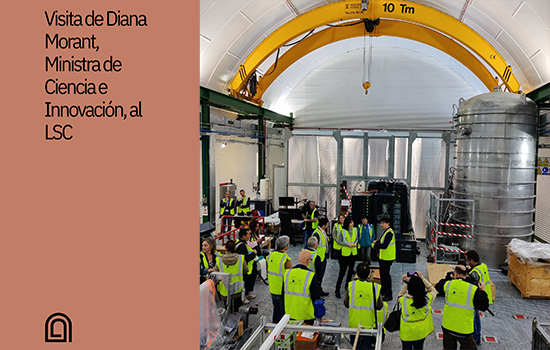
Diana Morant Ripoll, Minister of Science and Innovation, visited the LSC facilities to see the progress of the Spanish contribution to the construction of the HyperKamiokande experiment and the underground construction of the NEXT-100 detector.
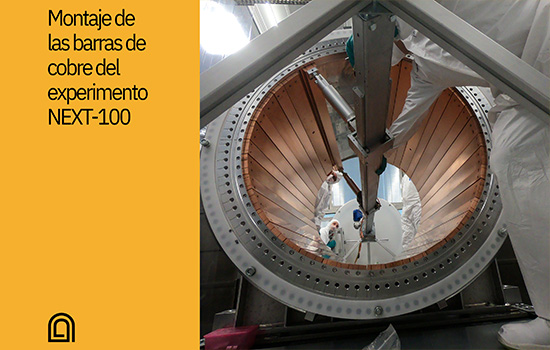
This week, staff from the NEXT collaboration completed the assembly of the 40 radio-pure copper bars, provided by the LSC, which form part of the shielding of the new NEXT-100 detector.
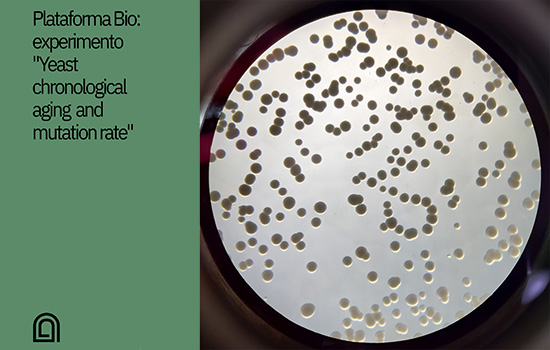
Between March 3-17, Lorena Martínez, from the Computational Synthetic Biology group (I2SysBio), travelled to the LSC to carry out the first phase of the ‘Yeast chronological aging and mutation rate’ experiment in an underground environment.
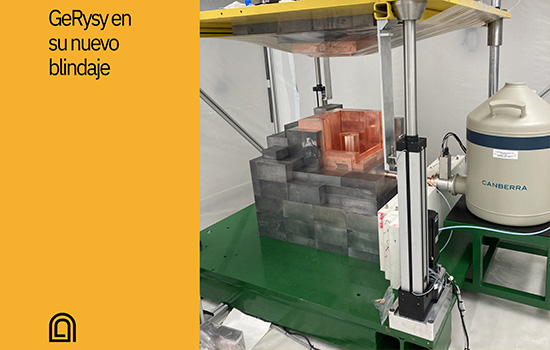
GeRysy, an ultra-pure germanium detector, has been operating for a month in its new shielding inside a removable clean tent.
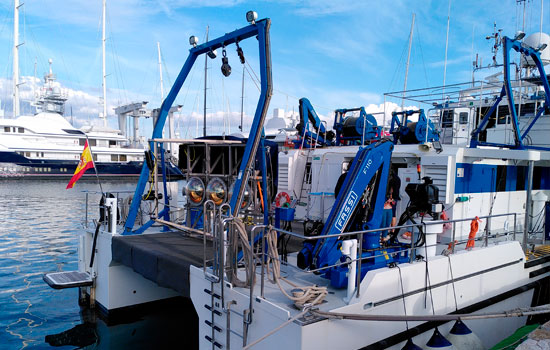
Between 13 and 17 February, the Balearic Islands Coastal Observation and Forecasting System (ICTS SOCIB) placed the Oceanographic Vessel B/O SOCIB at the disposal of the LSC. This collaboration between the two institutions has made it possible to validate the resistance to underwater implosion of the light sensors of the Hyper-Kamiokande international neutrino telescope in the bay of Palma, Mallorca.