


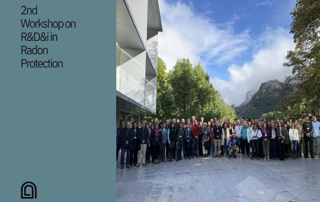
2nd Workshop on R&D&i in Radon Protection
This week, the LSC hosted the second R&D&I Meeting on Radon Protection. More than 80 researchers, technicians, and institutional representatives discussed advances in protection against this naturally occurring radioactive gas. The meeting brought together research groups from across Spain, along with national and European stakeholders, to foster scientific exchange and promote future projects that generate knowledge and develop solutions for the benefit of the public and workers
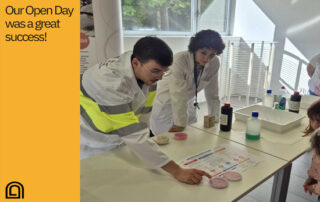
LSC Open Day 2026 was a great success
We would like to thank everyone who came to the LSC and took part in the different activities. It was a pleasure to open the doors of our premises once again and share a day full of science and experiments for all ages. Thank you for joining us and hope to see you next year!
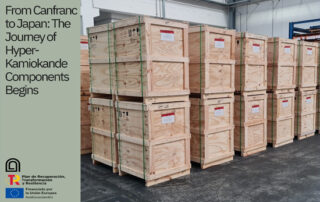
From Canfranc to Japan: The Journey of Hyper-Kamiokande Components Begins
The manufacturing of the domes and steel conical bodies that will form part of the top section of the Hyper-Kamiokande tank has now been completed. The HK team at the LSC is currently carrying out the necessary quality assurance checks before shipment. Over the coming months, these components will be transported to Japan, where they will become part of the future detector. Both components will be transported by sea in their respective boxes and shipping containers.
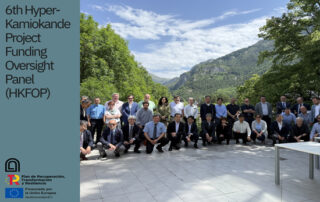
6º Hyper-Kamiokande Project Funding Oversight Panel (HKFOP)
Los días 18 y 19 de junio, la 6ª reunión del HKFOP reunió a representantes de los países participantes, organismos financiadores y partes interesadas de Hyper-Kamiokande. En la reunión se analizó la situación financiera del proyecto, las contribuciones internacionales y los planes presupuestarios y de recursos para las próximas fases. El 18 de junio, los asistentes visitaron las instalaciones del LSC en Walqa (Huesca) y las instalaciones subterráneas en Canfranc. Las sesiones principales de la reunión se celebraron el 19 de junio en la sede del LSC.6th Hyper-Kamiokande Project Funding Oversight Panel (HKFOP).
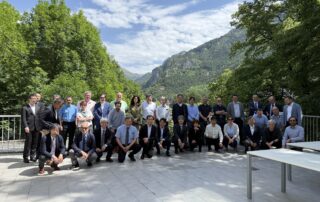
6th Hyper-Kamiokande Project Funding Oversight Panel (HKFOP)
On June 18–19, the 6th HKFOP meeting brought together [...]
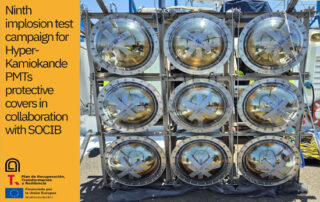
Ninth implosion test campaign for Hyper-Kamiokande PMTs protective covers in collaboration with SOCIB
Last week, the ninth implosion test campaign to validate the protective covers for the sensors of the future HK neutrino telescope was successfully completed. Over the course of a week, a team of seven members from the LSC and UdG carried out the tests at the SOCIB facilities in Palma de Mallorca. A total of three tests were performed, confirming that the initial production of protective covers are capable of containing an implosion in the event of a sensor failure. One step closer to making Hyper-Kamiokande even safer.